
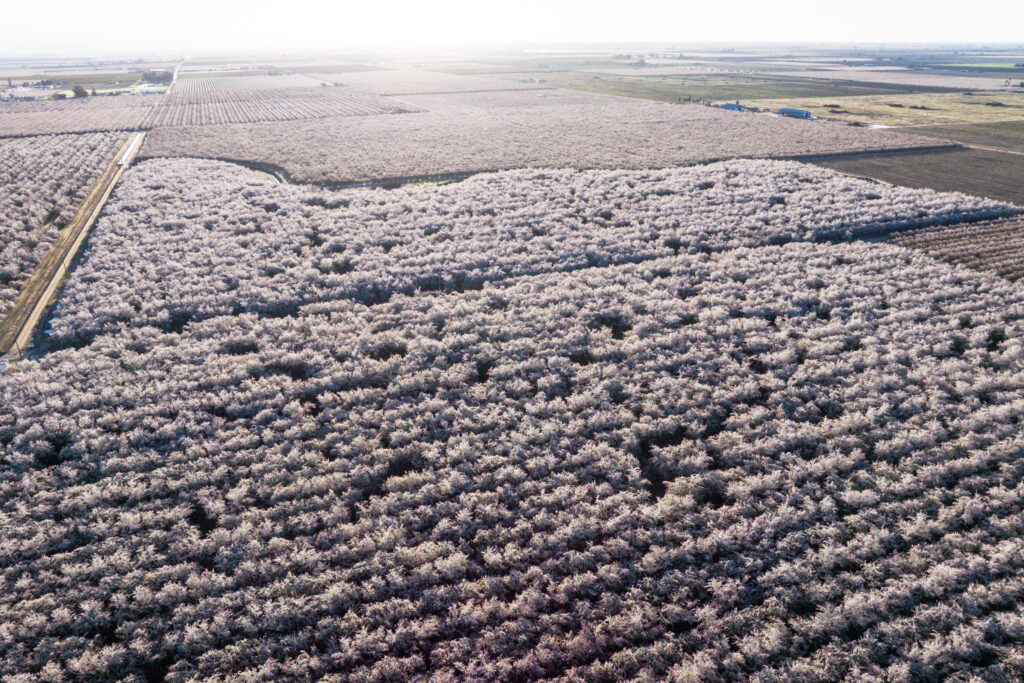
For a few fleeting weeks each year, fruit and nut trees across the Central Valley erupt in bloom. Clouds of pale pink and white flowers transform the landscape into a cotton-candy colored dream, with swathes of the countryside painted in soft pastels as far as the eye can see. If you’re in California from mid-February through early March, carve out a day to explore one of the California Blossom Trails and experience the magic firsthand!
When is the best time to explore the California Blossom Trails?
While the exact time of bloom varies each year according to weather conditions, mid-February through early March is usually the best time to see the California Blossom Trails in all their glory! Almond trees typically kick off the festivities, with blooms emerging the first couple weeks of February, followed shortly after by stone fruit trees- apricots, plums, peaches and nectarines.
If you’re hoping to snap a few pics during your Blossom Trail adventure, early morning or late afternoon light will add a gorgeous golden glow to your photos. That being said, these trails are simply stunning no matter the weather conditions – so don’t skip your trip if the forecast is dreary. Dark clouds add drama to the landscape and create captivating images where the pastel blooms really pop.
What types of fruit and nut trees are showcased along the California Blossom Trails?
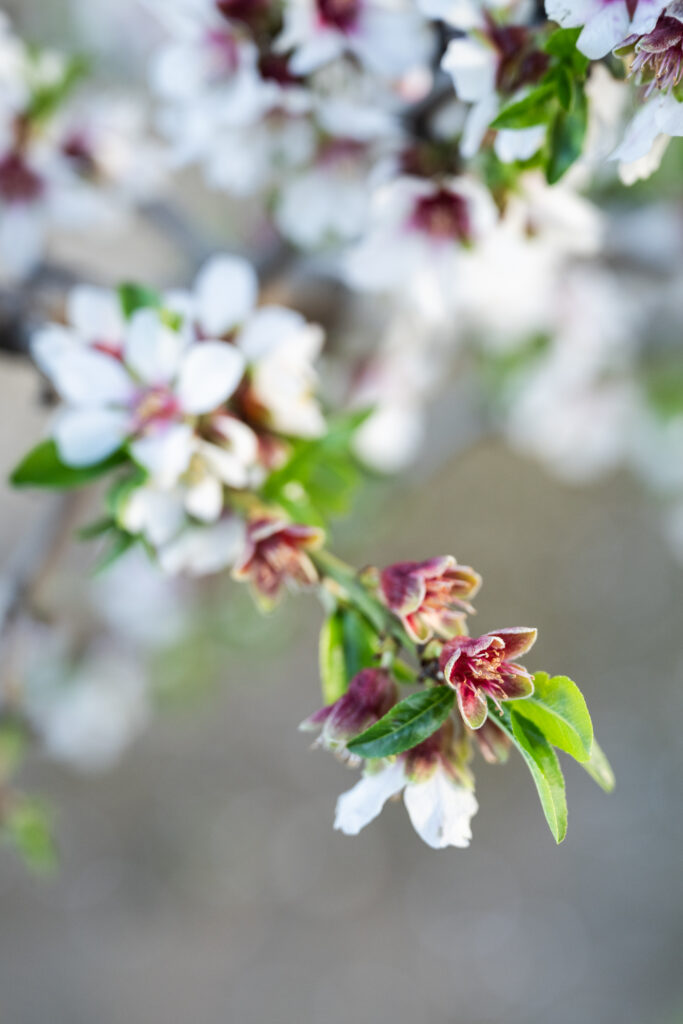
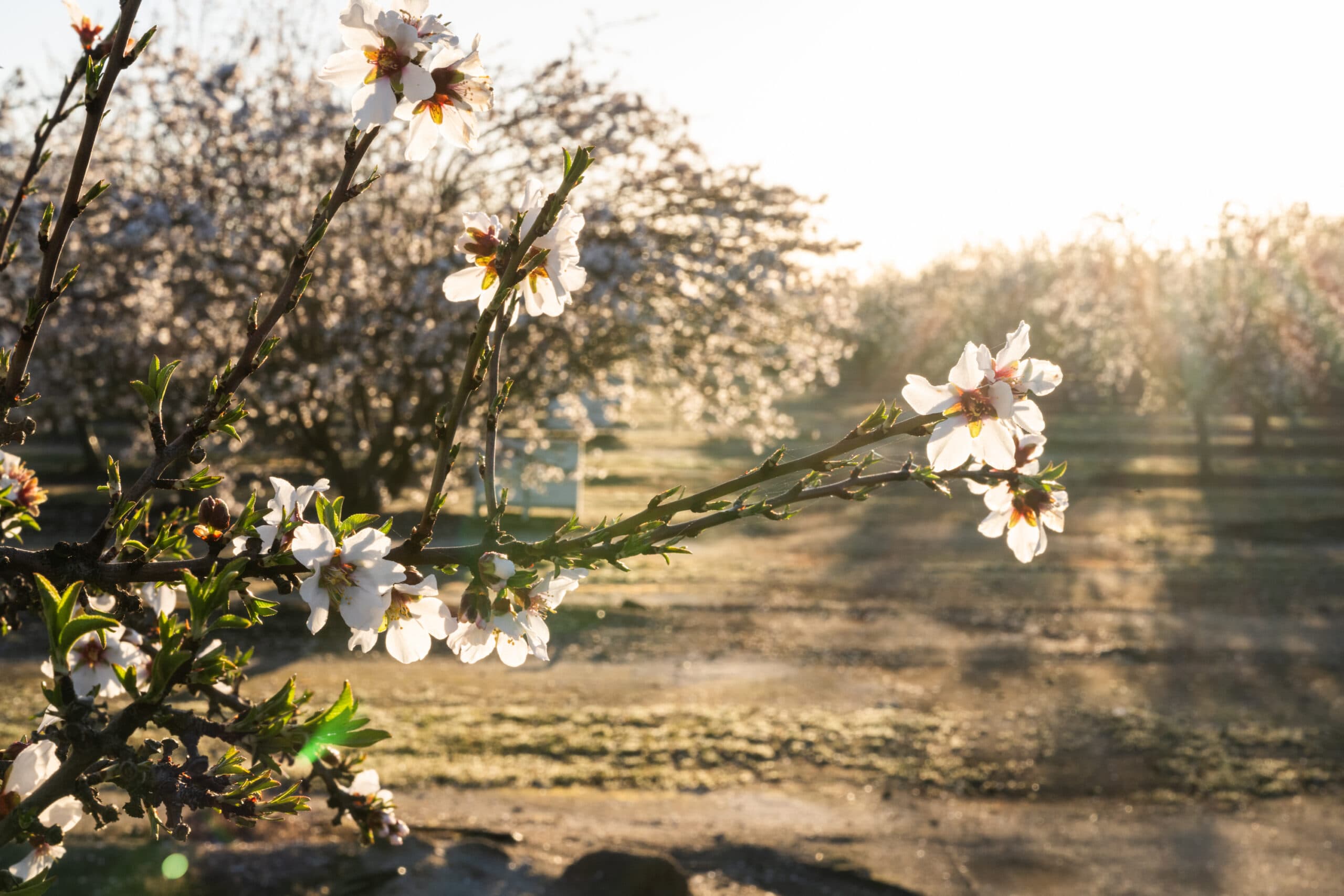
Almond Blossoms
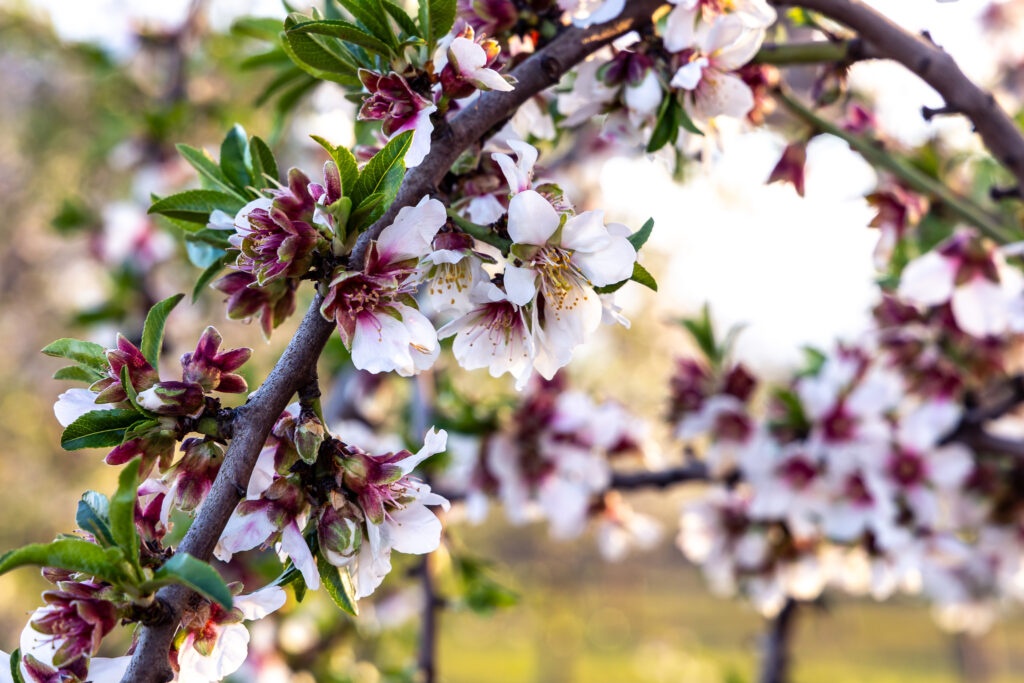
Over 1.5 million acres of almonds are grown in California’s Central Valley. So, it’s no surprise that almond blossoms, with their white petals and pink centers, are the most frequently spotted blooms along the various California Blossom Trails.
Apricot Blossoms
Apricot Blossoms have light pink or white blossoms with yellow centers. The base of the flower is pink-hued, which helps to distinguish them from prune blossoms.
Peach and Nectarine Blossoms
Peaches and nectarines are genetically identical, with one obvious exception: Peaches have a soft, fuzzy skin, while nectarines are smooth. Both Peach and Nectarine Blossoms have vibrant pink petals and darker magenta centers.

Prune and Plum Blossoms
Prunes are plums – Both prune plums and traditional plums are grown throughout the Central Valley, and can be identified by their white flowers and vibrant yellow centers. Fun fact: only one specific variety of plum is grown and dried to create prunes.
Apple Blossoms
Apple trees are grown near the edges of the foothills in the Central Valley. The blossoms start as pink buds. As the flowers open, the petals fade to white or very light pink.
Cherry Blossoms
If you’re exploring the Modesto or Visalia Blossom Trails, keep an eye out for cherry blossoms! The clustered blooms range from white to darker pink with pale yellow centers.
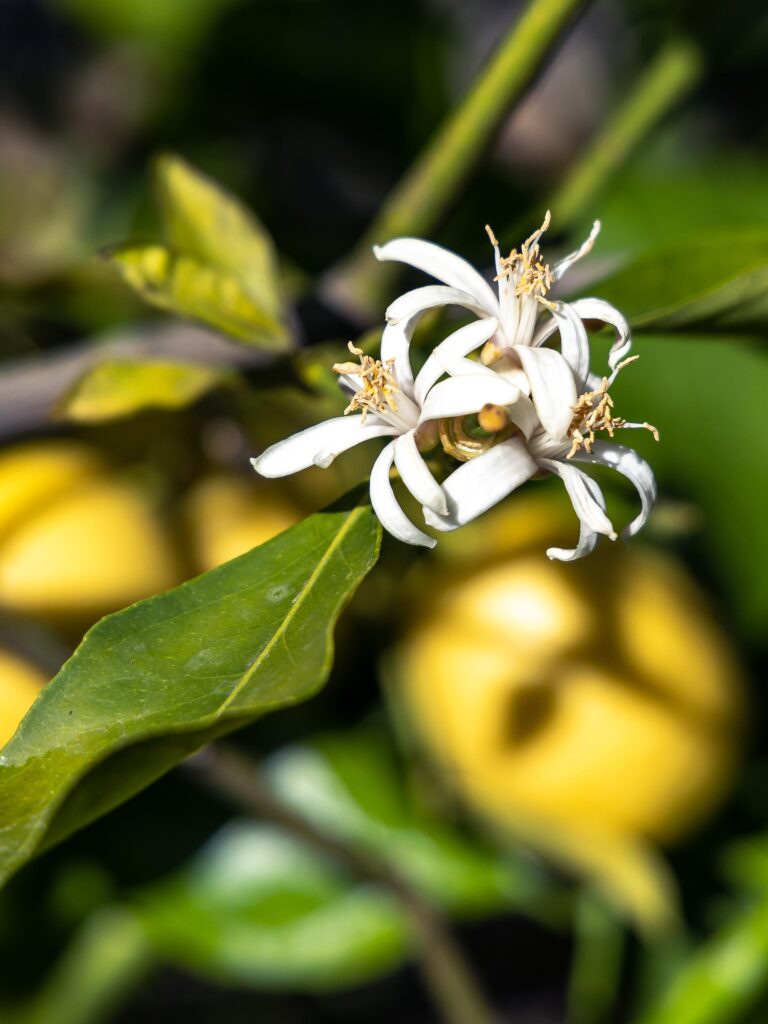
Citrus Blossoms
If you visit the Blossom Trails towards the southern end of the Central Valley, you’ll spot citrus trees studded with brightly colored citrus fruits – as well as the next season’s beautiful blooms! Citrus blossoms are star-shaped white flowers and incredibly aromatic.
Fun fact: citrus fruits are the only fruits where you’ll find fruit and flowers appearing on the tree at the same time!
How to explore California Blossom Trails: A few rules to follow
Just because you’ve seen your cousin Jenny’s Instagram pics of her family in the blooms doesn’t mean that it’s open season in the orchards. Remember: while most farmers are happy to share the beauty of bloom season with the general public, these orchards are private property!
It’s also important to remember that many of these routes are rural, so be prepared. Plan ahead: fill up the gas tank, pack snacks and water, and download (or print) your maps in case cell service is spotty and Google Maps won’t work.
Here are a few simple rules to remember, courtesy of our friends at California Grown:
Don’t touch the blossoms.
We know, the blossoms are so pretty BUT – and we can’t stress this enough -resist the urge to touch them. These will soon develop into fruit, and touching them may mean knocking down the fruit that is each farmer’s livelihood!
Don’t wander into the orchards.
Blossom Trail photos are particularly popular. Most farmers won’t mind if you want to snap a few pics, but don’t wander off into the orchards. They’re private property.
Fill up on gas.
The Blossom Trail winds through rural areas and gas stations are few and far between. Be sure to fill up on gas before you head out.
Don’t count on cell signal.
Since you’re in a rural area, cell signal can be weak or even non-existent in parts of the trail. Be aware and plan accordingly.
The best Central Valley Blossom Trails
Fruit and nut blooms are easy to spot as you travel through the Central Valley, so if you’re short on time, there’s no need to follow a trail. However, many Central California counties have created their own Blossom Trails, designated routes that lead through the most scenic, blossom-filled corridors. Here are few of the most popular California Blossom Trails:
Fresno County Blossom Trail
The Fresno County Blossom Trail is seriously stunning. Start at Simonian Farms and work your way east, winding through the gently rolling country roads at the base of the Sierra Foothills before heading back towards Highway 99. While the complete 62-mile loop of fruit orchards takes a few hours to complete, our friends at CA GROWN suggest a shortcut. If you’re short on time, catch the Fresno Blossom Trail at The Blossom Trail Fruit Stand and travel down Reed Avenue all the way until Manning. You’ll still get the feel of the trail in a fraction of the time.
Download the CA GROWN Fresno County Blossom Trail Map!
Madera Blossom Trail
The Madera Blossom Trail is shorter than its Fresno County counterpart, but no less spectacular. Start at the intersection of Hwy 41 and Ave 9. As you make your way through the quiet countryside, you’ll see thousands of prune and almond trees blanketed in blooms. End your Madera Blossom Trail excursion with a glass of wine at San Joaquin Wine Company.
Download the CA GROWN Madera Blossom Trail Map!
Modesto Almond Blossom Cruise
If you’re traveling from the Bay Area, the Modesto Blossom Trail is an easy, scenic day trip. Opt for the self-guided tour, following a map with loops ranging from 1-3 hours. Be sure to download the Audio tour – it’s packed with local farming history, farm-fresh pit stops and a few hidden-gen vistas.
Prefer to leave the logistics to someone else? Splurge on the adults-only Buzz Bus, a luxury tour through miles of blooming almond orchards, with stops at three picturesque local wineries along the way.
Download the Modesto Blossom Cruise Map
Visalia Blossom Trail
Tulare County is just a short drive from both Kings Canyon and Sequoia National Parks, so why not take an off-the-beaten path route on your way to meander through some of California’s most scenic landscapes. If you’re going to make a day of it, be sure to stop at Bravo Farms and Bari Olive Oil to stock up on snacks along the way.
If you’re short on time, you’ll find the most diversity – and an abundance of blooms – on Ave. 384 between Highway 99 and Route 63
Kern County Almond Blossoms
Plenty of Southern California residents make the trek over the Grapevine to explore Kern County’s stunning almond orchards. Almond blossoms are visible along both sides of the 99, but a quick detour yields some truly incredible views. One of the most common paths starts at the intersection of Coffee and Snow roads. Head north to Seventh Standard Road, then turn east and continue until you reach Highway 99. It’s a simple, scenic detour that showcases the magic of blossom season.
Yolo County Almond Blossoms
Yolo County doesn’t have a designated blossom trail, but they do have a handy map that shows you the locations of almond orchards so that you can choose your own adventure. The easiest route starts in Downtown Winters. From there, make your way towards Séka Hills, driving down Road 89 and then heading east on Highway 16. Once you arrive at Séka Hills, enjoy a glass of wine or an olive oil tasting on their outdoor patio overlooking olive and almond orchards.
Pro-tip – if you plan your trip during Yolo County’s annual Almond Festival, Séka Hills offers guided tours of their almond orchard in addition to many other special events throughout the weekend!
Article by Hilary Rance. Photography by James Collier and Hilary Rance.