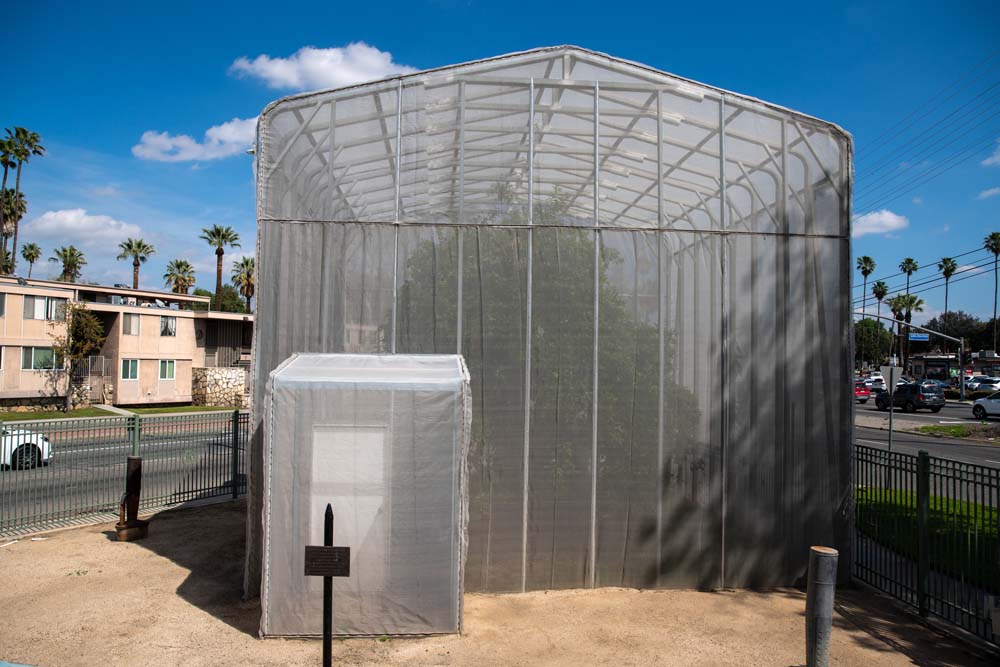
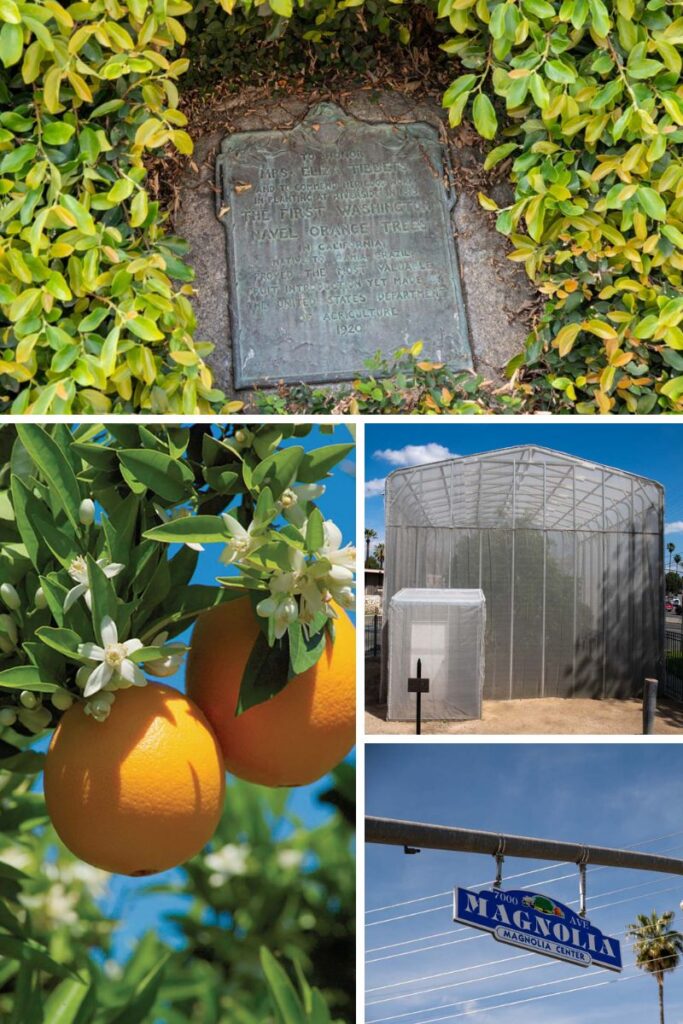
The Parent Washington navel Tree in Riverside, California, is the single most important tree in U.S. citrus history. Planted in 1873, it is the original source of nearly every navel orange grown commercially in California and around the world, helping launch one of the state’s most defining agricultural industries.
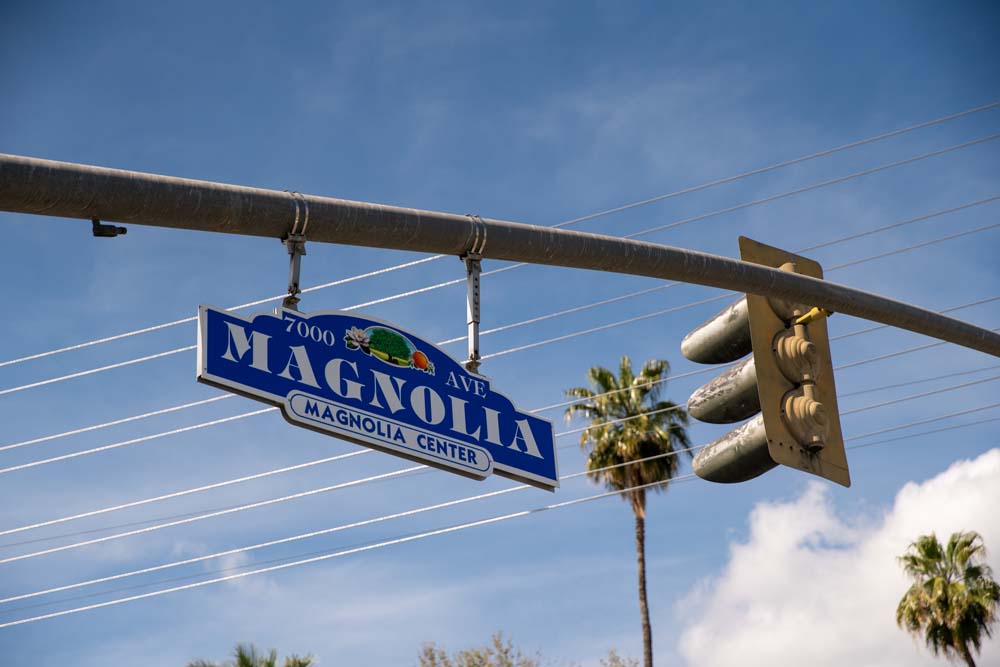
At the corner of Magnolia and Arlington Avenues in Riverside, California, there is a small, fenced patch of ground with a single unassuming orange tree. What looks like a modest tree is, in reality, the foundation of California’s citrus economy
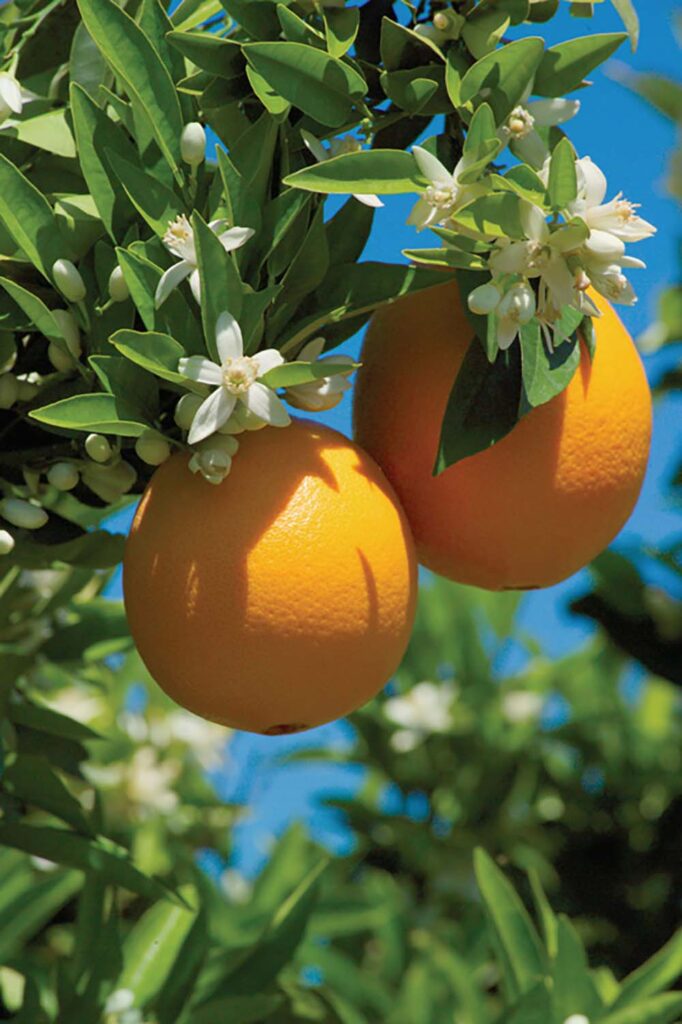
Today, nearly every navel orange grown in California, Arizona, Australia, South Africa, and every other commercial navel region in the world descends from the Parent Washington navel orange or its now-lost sister tree.
What Is the Parent Washington Navel Tree?
The Parent Washington navel Tree is the original navel orange tree that got its start in Riverside, California, in 1873. Because navel oranges are seedless and must be propagated through grafting, nearly all navel orange trees grown commercially today trace their lineage back to this single tree.
Origins of California’s Citrus Industry
To understand the story of California’s citrus industry, you need to start in Brazil. Sometime in the 1800s, a chance mutation appeared on a Selecta orange tree on a plantation in the state of Bahia.
The mutation produced a fruit with a small secondary fruit growing inside its blossom end, giving it a belly-button-like shape. This is why it is named the “navel.” The mutation also made the fruit seedless. This means the only way to propagate it was to graft it onto existing citrus rootstock.
In 1870, William Saunders, superintendent of the United States Department of Agriculture’s propagating gardens in Washington, D.C., requested cuttings from a Presbyterian missionary in Bahia. Twelve cuttings arrived. Saunders grafted them onto rootstock in the USDA greenhouses in the capital, hoping to find a new citrus variety worth developing for the emerging American market.
The USDA’s plant explorers were constantly looking for hardy varieties to distribute to farmers experimenting on new land. California, in particular, was the obvious testing ground.
How One Woman’s Garden Shaped the Citrus Industry
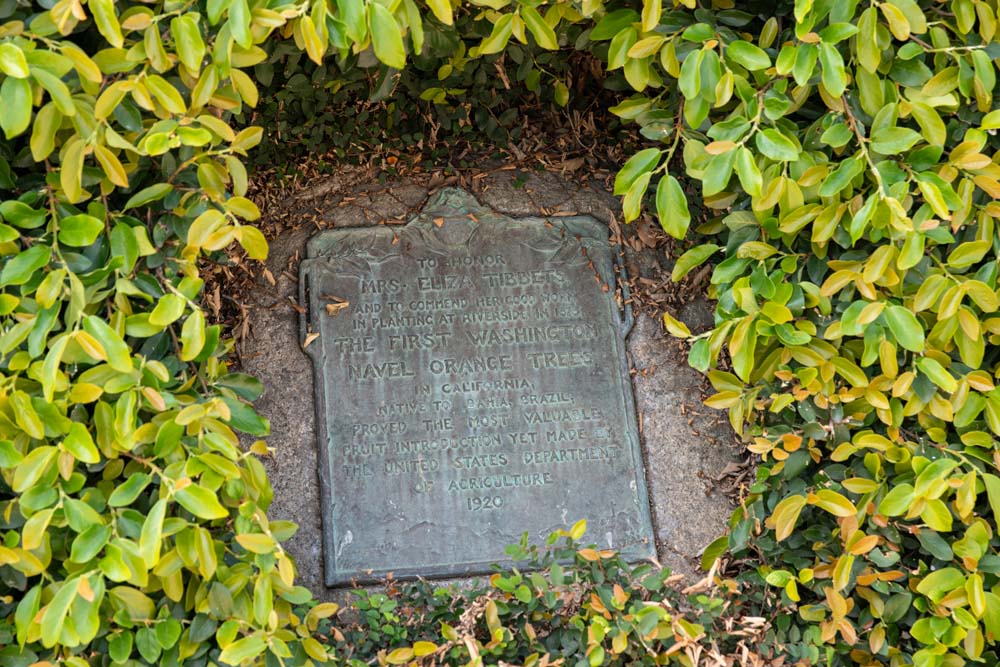
2026 is the United Nations’ International Year of the Woman Farmer, and Riverside’s entire citrus industry is, in a very literal sense, traceable to one woman’s garden – Eliza Tibbets.
In 1873, Luther and Eliza Tibbets were a Riverside couple active in civic and horticultural life. They requested trees from the USDA through a personal connection with William Saunders. Two of the greenhouse-grown Bahia navel orange trees were shipped west to their small property in Riverside.
According to multiple local accounts, Eliza Tibbets is the one who actually planted and tended them. The story is often collapsed into “Luther and Eliza” or just “the Tibbets family,” but the planting, watering, and survival of the trees in Riverside’s hard Southern California summer was Eliza’s work. Only one of the two trees survived in the long term. The second did not survive its early years. The survivor is the tree that still stands today.
One Citrus Tree, to Half a Million Citrus Trees
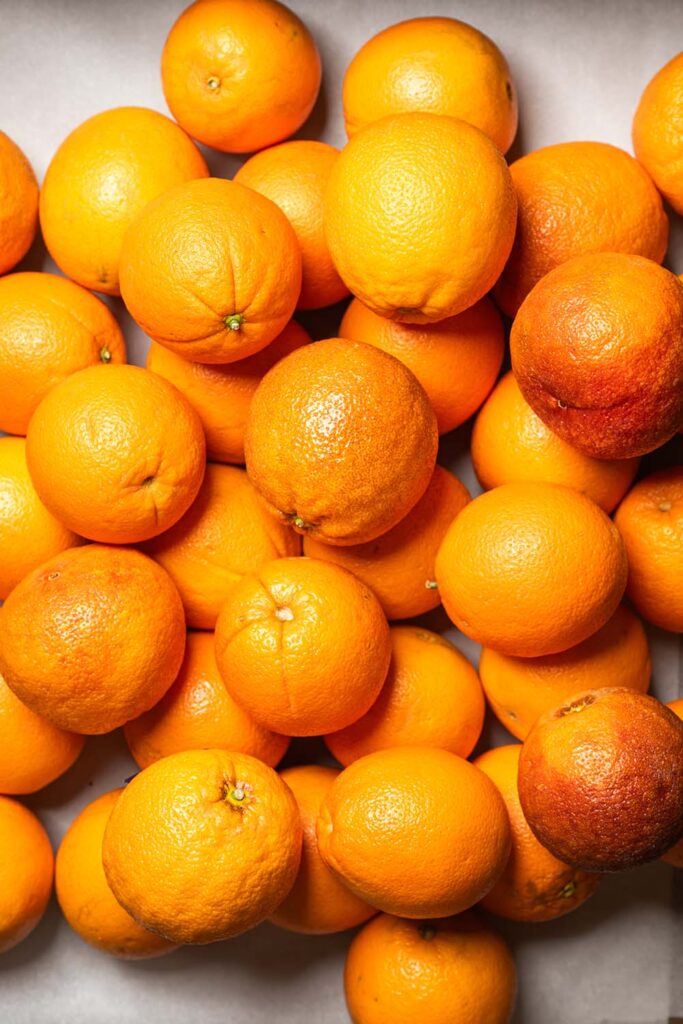
When Eliza’s surviving tree began bearing fruit, the result was a revelation. The Washington navel, as Saunders had christened it, ripened in midwinter, shipped well, and had the kind of clean, sweet flavor that held up in transit across the country. In an era before widespread refrigeration, those properties were commercially enormous.
Riverside growers lined up to take budwood cuttings from the tree. By the early 1880s, more than half a million navel orange trees had been propagated from this single source and planted throughout Southern California.
The Washington navel became the economic engine of Riverside. The same can be said of Orange, Los Angeles, San Bernardino, and Ventura counties shortly thereafter. Entire new towns organized themselves around citrus: packing houses, railroad spurs, irrigation cooperatives, and, eventually, the founding institutions that became UC Riverside and its Citrus Variety Collection.
By the 1890s, Riverside, a town of fewer than 10,000 people, was reported to be the richest city per capita in the United States. California now produces the majority of the United States’ fresh citrus, and that agricultural dominance can be traced directly back to the success of this single tree.
Why the Parent Washington Navel Tree Still Stands Today
Most agricultural origin stories get lost to development. Riverside chose a different path. In 1903, the surviving Tibbets navel tree was transplanted to its current location at the corner of Magnolia and Arlington Avenues. There it was protected and formally celebrated as the source of the industry that built the city.
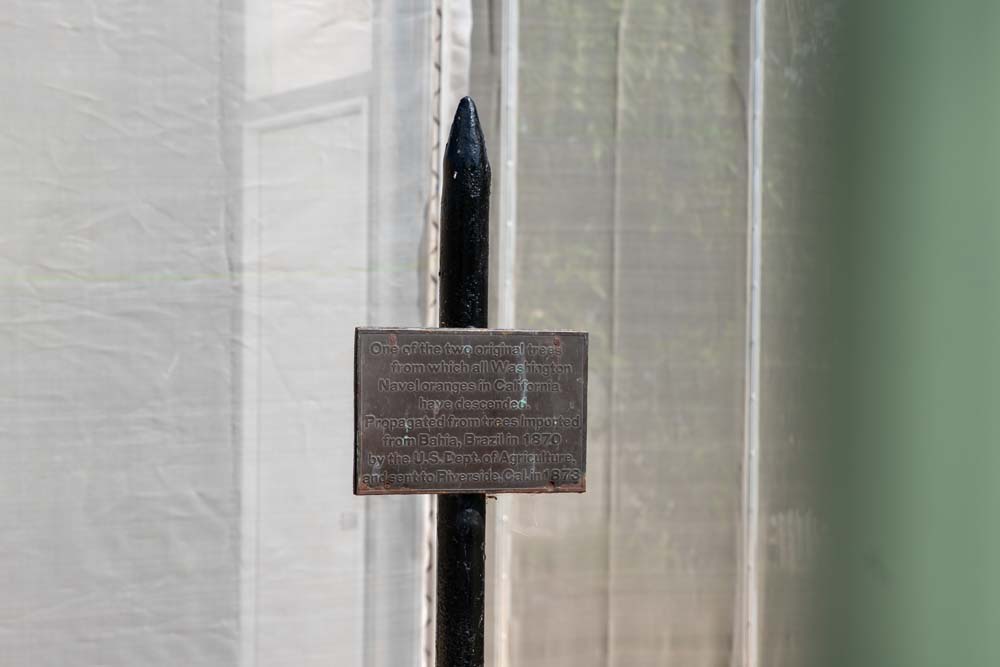
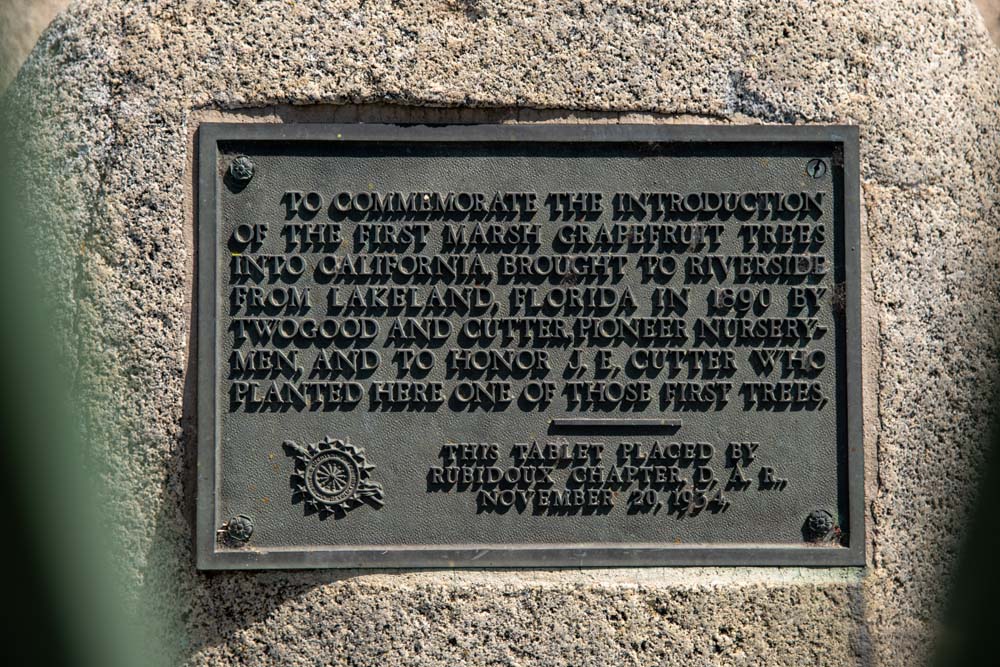
Today, the site is a small public plot, free to visit, with interpretive signage, a replica of the historic fence that once surrounded it, and the tree is enclosed in order to protect it. The reason is that the tree is one of the oldest California landmarks still bearing fruit. It is even designated California Historical Landmark No. 20.
Citrus experts from UC Riverside have helped preserve it for more than a century, grafting it back onto fresh rootstock when necessary and maintaining it through multiple Southern California droughts. What you are looking at, when you stand at the fence in Riverside, is effectively the genetic ancestor of every Washington navel orange in commercial production.
Riverside’s Citrus Legacy, Still Alive
The Washington navel is no longer the only game in town. California’s commercial citrus industry has diversified to include Valencias, Cara Caras, blood oranges, mandarins, pomelos, and specialty citrus lines.
Today, citrus remains one of California’s most important specialty crops. Citrus contributes billions annually to the state’s agricultural economy. It also supports thousands of growers across regions like the Central Valley, Inland Empire, and Imperial Valley.
But the Washington navel is still among the most commercially important orange varieties in California. Riverside County’s own groves, many of them around the California Citrus State Historic Park, keep the heritage visible to modern visitors. The industry around the tree has changed, but the tree itself has not.
Why This Tree Matters to California Agriculture
The Parent Washington Navel Tree is more than a historical curiosity. The tree marks the beginning of California’s transformation into one of the world’s most productive agricultural regions. The success of navel oranges helped establish infrastructure, research institutions, and farming practices that continue to shape the state’s food system today.
How To Visit the Parent Washington Navel Tree in Riverside
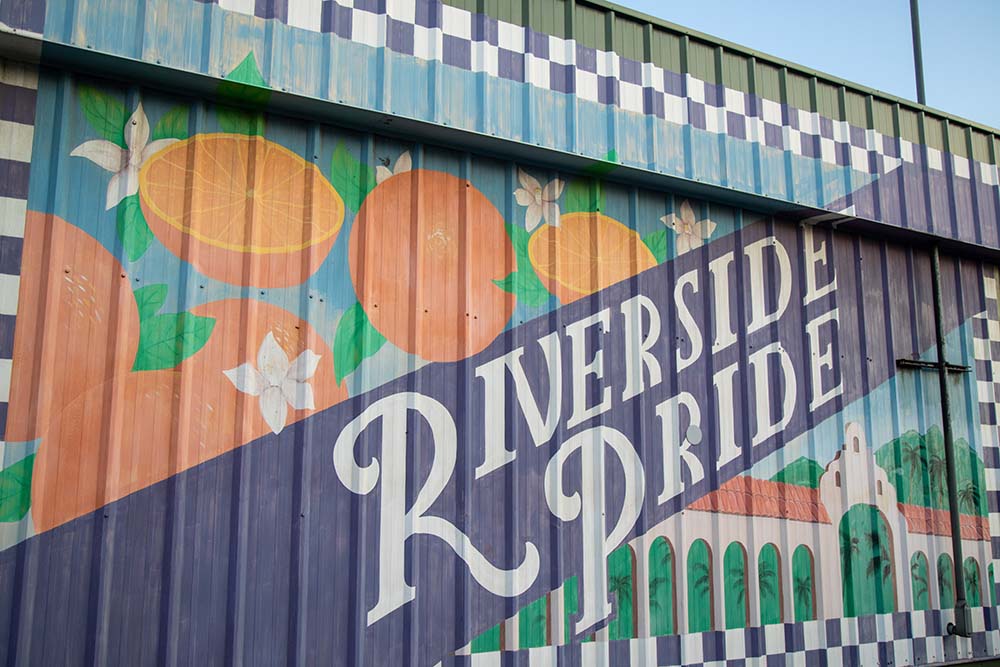
Visiting the Parent Washington Navel Tree is one of the easiest ways to experience California’s agricultural history firsthand. The Parent Washington Navel Tree is a ten-minute drive from downtown Riverside and about fifteen minutes from the California Citrus State Historic Park. At the park, you can see a restored citrus grove, heritage varieties, and interpretive exhibits dedicated to California’s citrus heyday.
For a fuller Riverside day, add UC Riverside’s Botanic Gardens and a stop in historic downtown Riverside. Or, for a broader look at the region’s agriculture, see what grows in Riverside County. You will also want to look at more than 15 activities to do in Palm Springs and Riverside County.
Frequently Asked Questions About the Parent Washington Navel Tree
Where is the Parent Washington Navel Tree?
The Parent Washington Navel Tree is located in a small public park at the corner of Magnolia Avenue and Arlington Avenue in Riverside, California. It is free to visit and accessible year-round.
Who planted the Parent Washington Navel Tree?
Eliza Tibbets planted and tended the tree on her Riverside property in 1873, after she and her husband, Luther, received two Bahia navel orange trees from William Saunders of the U.S. Department of Agriculture. Only one of the two trees survived in the long term.
Why is the Parent Washington Navel Tree famous?
It is the original source of nearly all commercial Washington navel orange trees in California and around the world. Navel oranges are seedless, so production relies on grafting budwood onto rootstock. More than 500,000 navel trees were propagated from this tree. Its sister tree within the first decade of its planting, launching the California citrus industry.
Is the Parent Washington Navel Tree still alive?
Yes. The tree still stands at its Magnolia and Arlington locations and continues to produce fruit. There they preserve it and have been re-grafting for more than 150 years with the help of UC Riverside and the City of Riverside. It is California Historical Landmark No. 20.
This article is written by CA GROWN Creator Aida Mollenkamp, and images from Salt & Wind.
Aida is a food and travel expert, author, chef, Food Network personality, and founder of Salt & Wind Travel. With a career in food travel media and hospitality, she has traveled the globe in search of the best food destinations. Her cookbook, Keys To The Kitchen, is a favorite among home cooks seeking adventure, and her Travel Guides For Food Lovers series is cherished by food travelers.
Influenced by her many adventures and inspired by California’s bountiful produce, Aida’s recipes are fun, fresh, and bursting with flavor. We’re loving her Grilled Artichoke Recipe With Herbed Roasted Garlic Aioli – you will too!