

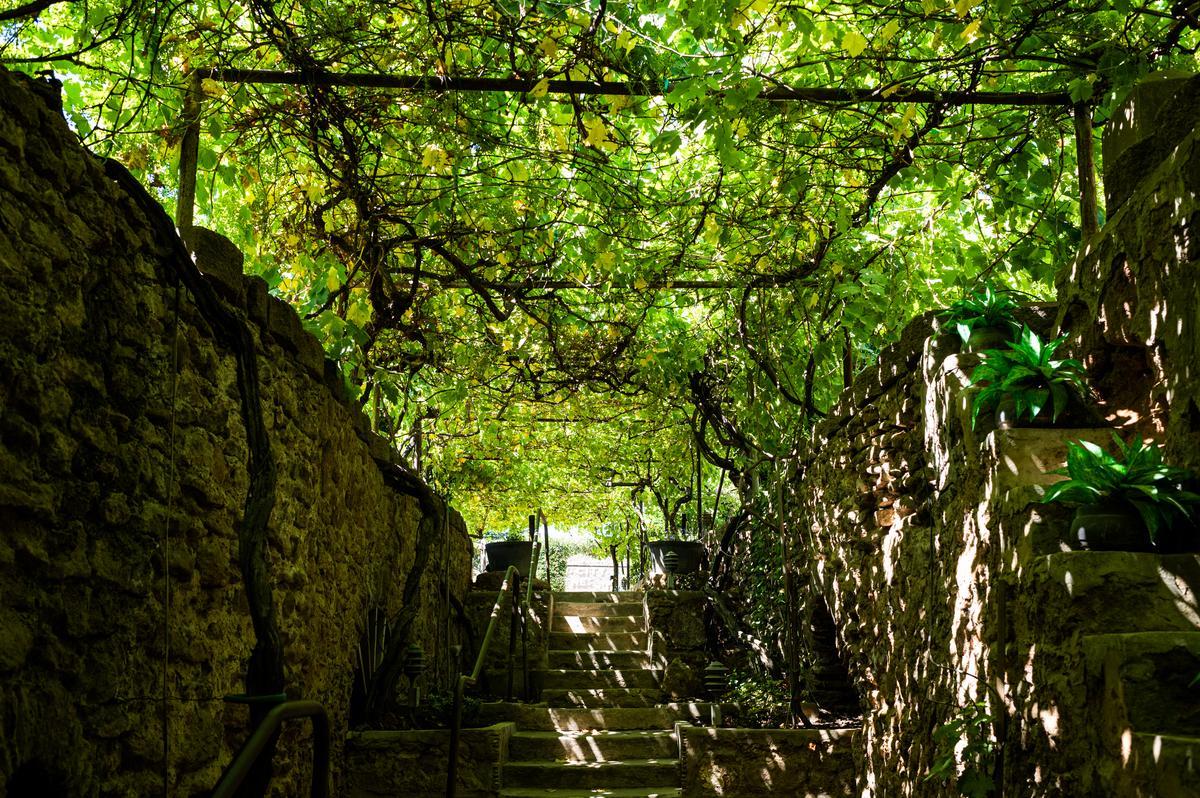
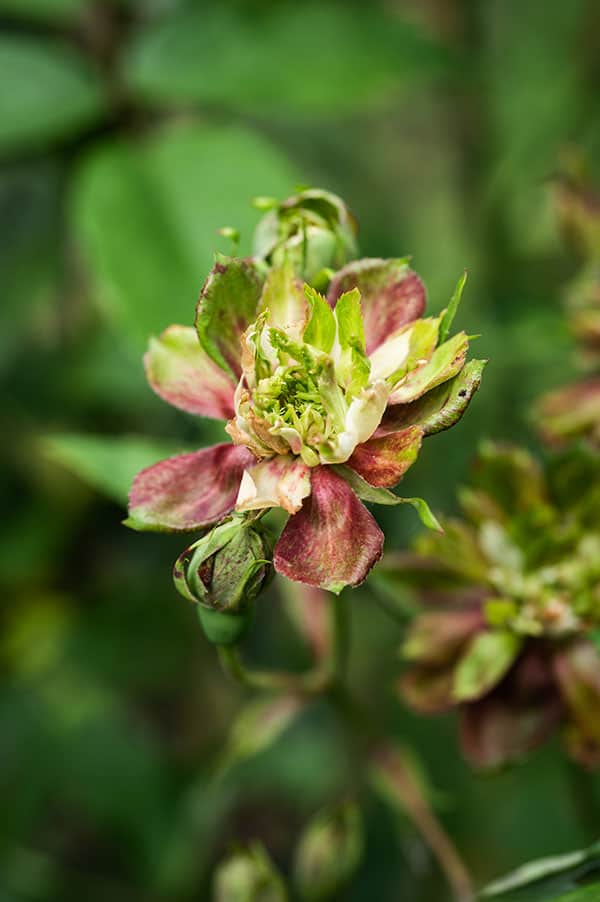
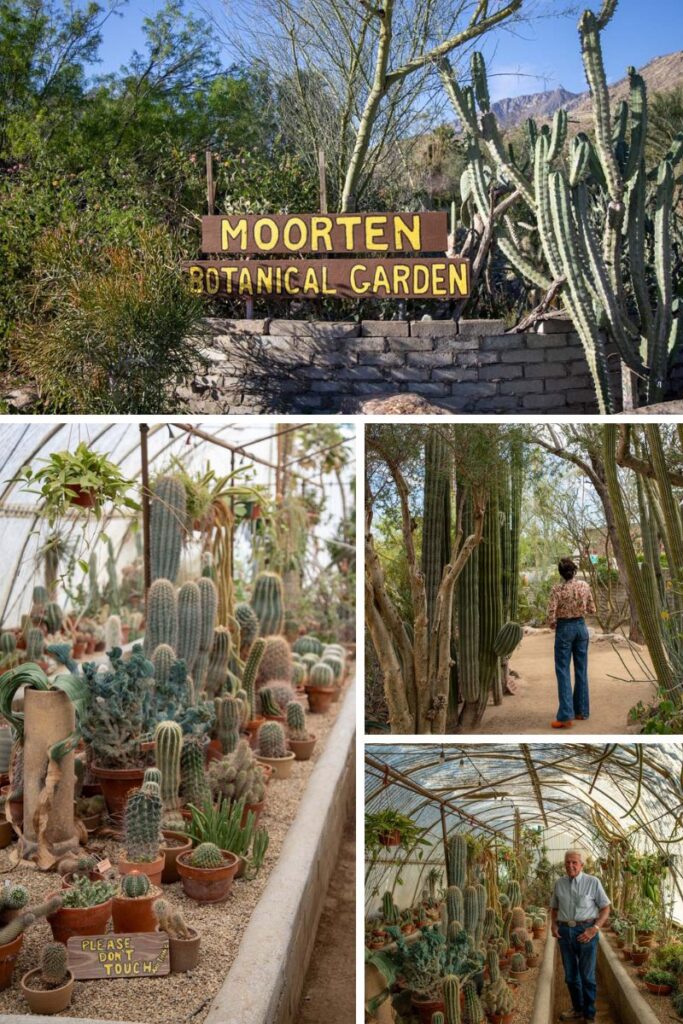
The Moorten Botanical Garden in Palm Springs is one of California’s most unique desert plant nurseries, preserving and growing more than 3,000 varieties of cacti and succulents.
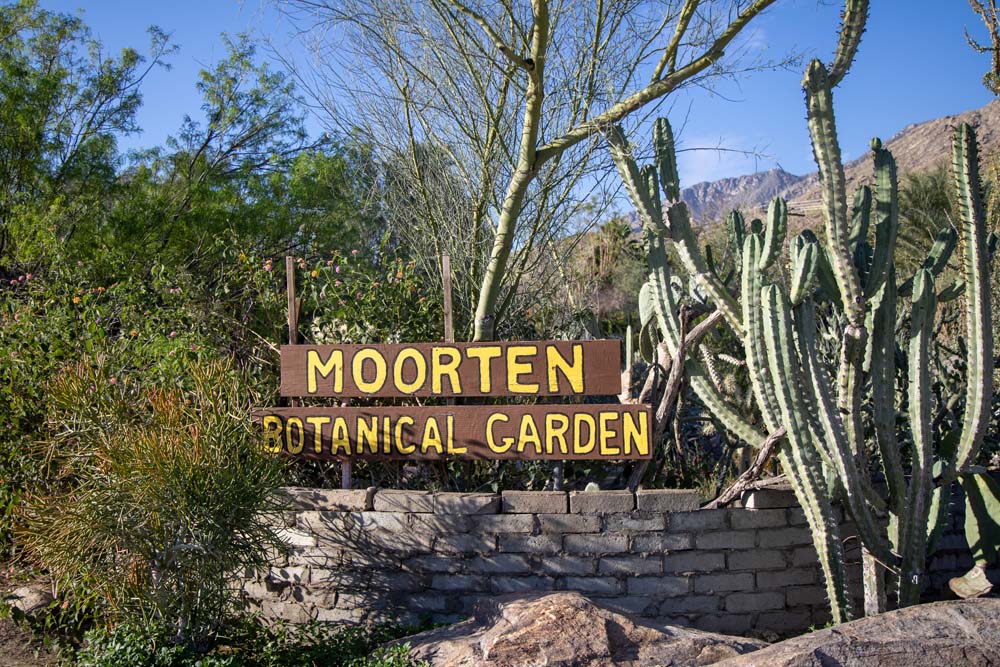
This family-run botanical garden offers a rare look at how California’s desert agriculture evolved, starting with one simple realization: “Cactus pays better.” That line comes from a sparse journal kept by Chester “Cactus Slim” Moorten while mining gold in the desert.
Moorten’s words were prescient because, seventy-one years later, the cactus is still paying. The Moorten Botanical Garden, which he and Clark’s mother, Patricia, founded, is at the south end of Palm Springs, still laid out by hand, and still run by their son, Clark.
In short, it’s California history in a garden and well worth a visit on your next trip to Palm Springs.

From Hollywood to the Desert Nursery: The Moorten Origin Story
Chester Moorten’s path to growing desert plants was anything but direct. Orphaned at sixteen in the Pacific Northwest, he hitchhiked to Hollywood at nineteen and found work in silent films. He was part of the original Keystone Kops, known for physical comedy and a contortionist’s flexibility. Then he got tuberculosis. Doctors told him to enter a sanitarium. Instead, he headed to the desert. It was a decision they warned would shorten his life. He lived another fifty years.
Chester spent those first desert years around Cottonwood Springs, east of what is now Joshua Tree National Park, mining abandoned gold claims and collecting interesting plants in his spare time. The math eventually became obvious.
By 1938, he had moved to Palm Springs and opened a small shop selling rocks, minerals, and fossils. There, he met Patricia, a research botanist working in Santa Monica. They married, combined their expertise, and started a nursery focused on desert plants.
That nursery became the Moorten Botanical Garden. In 1955, the couple acquired a small property at the south end of Palm Springs from Stephen Willard, one of the great early nature photographers of the California desert. Clark Moorten, their son, has been on the land ever since.
Landscaping for the Hollywood Set
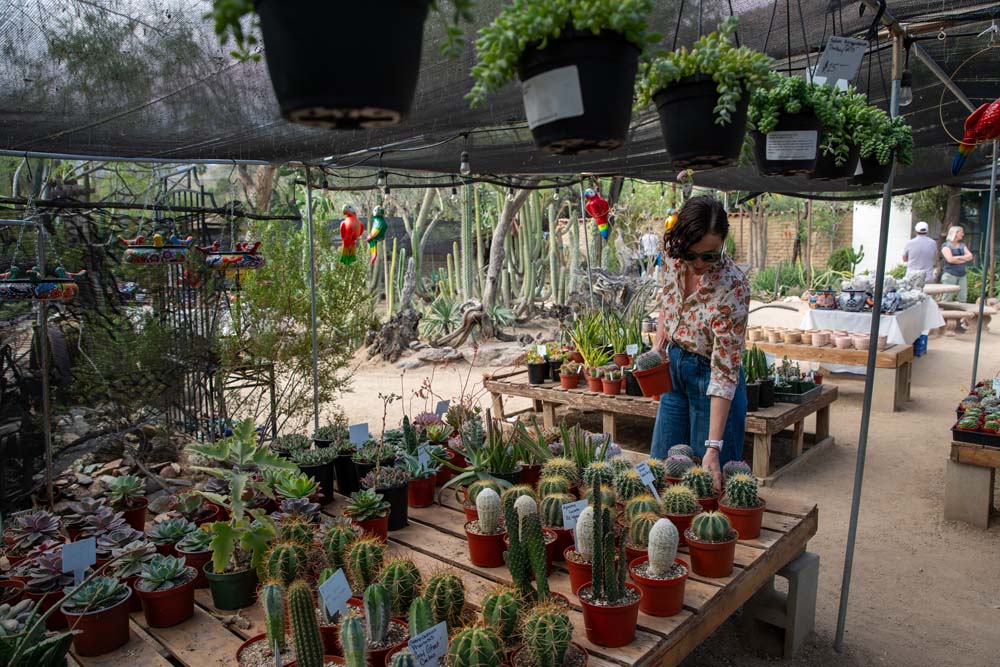
As Palm Springs developed into a Hollywood retreat, the Moortens helped define what desert landscaping could look like. Native and drought-tolerant plants, once overlooked, became essential to the region’s design language.
Their client list reads like a mid-century Academy Awards seating chart: Bing Crosby, Walt Disney, Frank Sinatra, Red Skelton. The Moortens didn’t just supply plants; they shaped entire landscapes around these homes.
One of their most visible contributions came indirectly. When Disneyland was being built, Disney’s team reached out for desert plants. The Moortens supplied what became Frontierland. Clark remembers being there as a kid, helping unload plants while picking oranges nearby.
They also found unexpected demand elsewhere, shipping tumbleweeds and manzanita to high-end department stores like Saks Fifth Avenue and Neiman Marcus for window displays. What grew in the desert was suddenly part of a national aesthetic.
An Acre of California Desert, Laid Out by Habitat
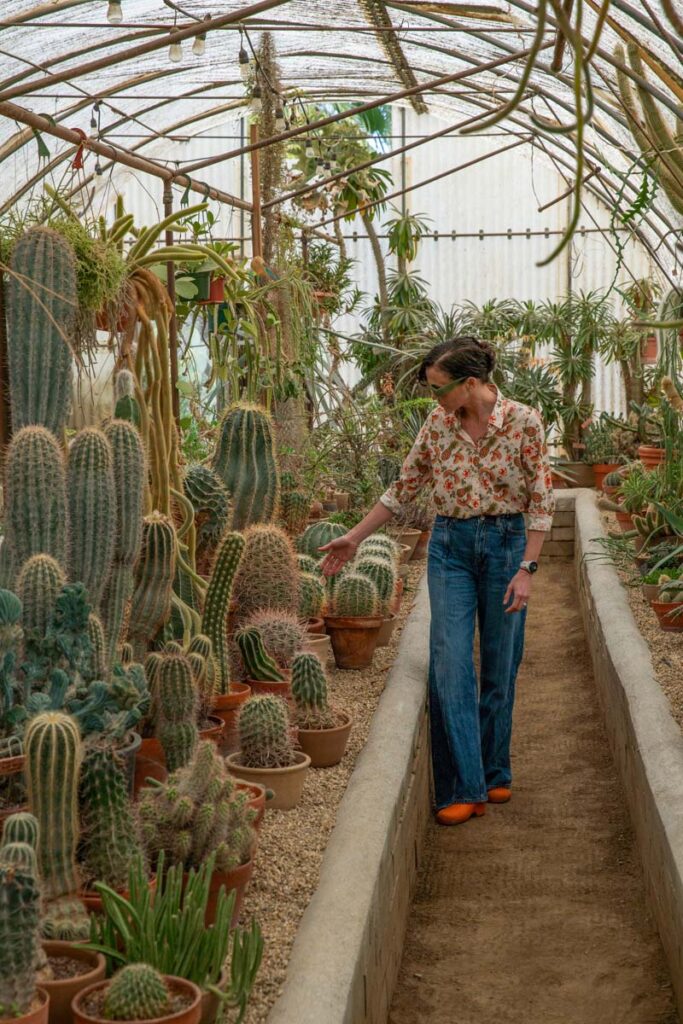
The garden itself was built one plant at a time. “When we acquired this place in ’55, there wasn’t a cactus or a rock on it,” Clark says. “We took care of that.” The garden is organized by desert habitats, a method commonly used in botanical and agricultural education to demonstrate how plants adapt to different climates.
Patricia laid out the property in geographic habitats, a walking tour of desert ecosystems without ever leaving Palm Springs. Visitors move from the Baja California section into a California native zone, then on through the southwestern deserts, Texas, and finally Mexico, which is home to more cactus varieties than anywhere else on earth.
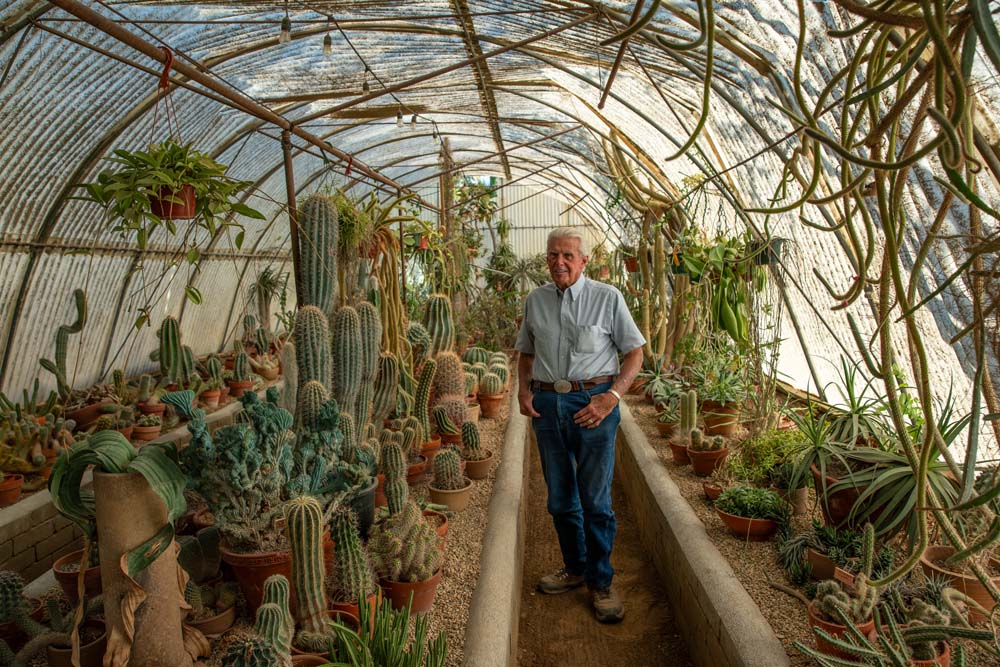
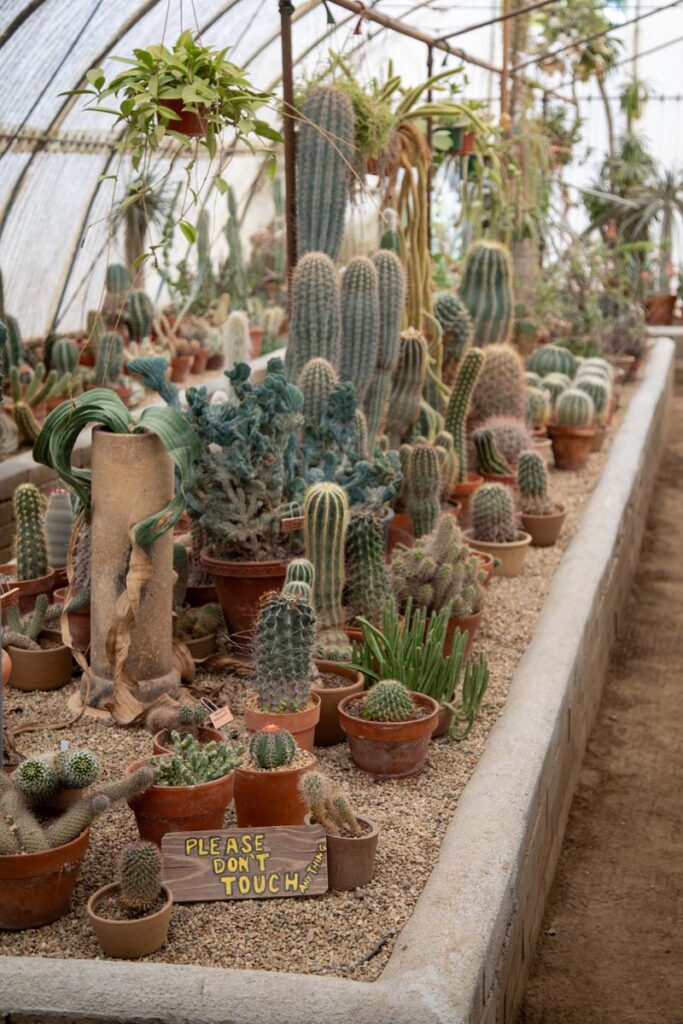
Patricia also coined the word “cactarium.” The idea was a terrarium, but for cacti, a greenhouse where delicate specimens could be raised under controlled conditions. The first Moorten cactarium, built in the 1940s, was made of muslin cloth stretched on an A-frame because screening and fiberglass were hard to obtain in the years after World War II.
The one still standing at the Palm Springs garden went up fifty years ago, built with a rigid frame and fiberglass by Chester while Patricia was away visiting family. “My mother was not happy,” Clark says. “It wasn’t the cactarium she wanted. But the structure is still up and working, so, you know, not bad.”
Plant Education and What’s Growing at Moorten Today
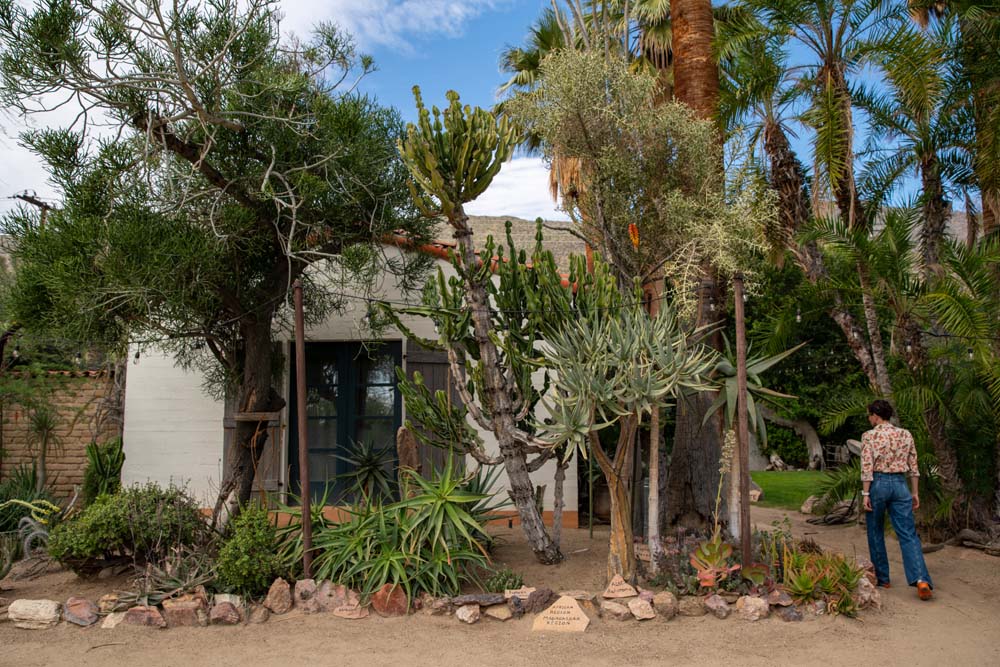
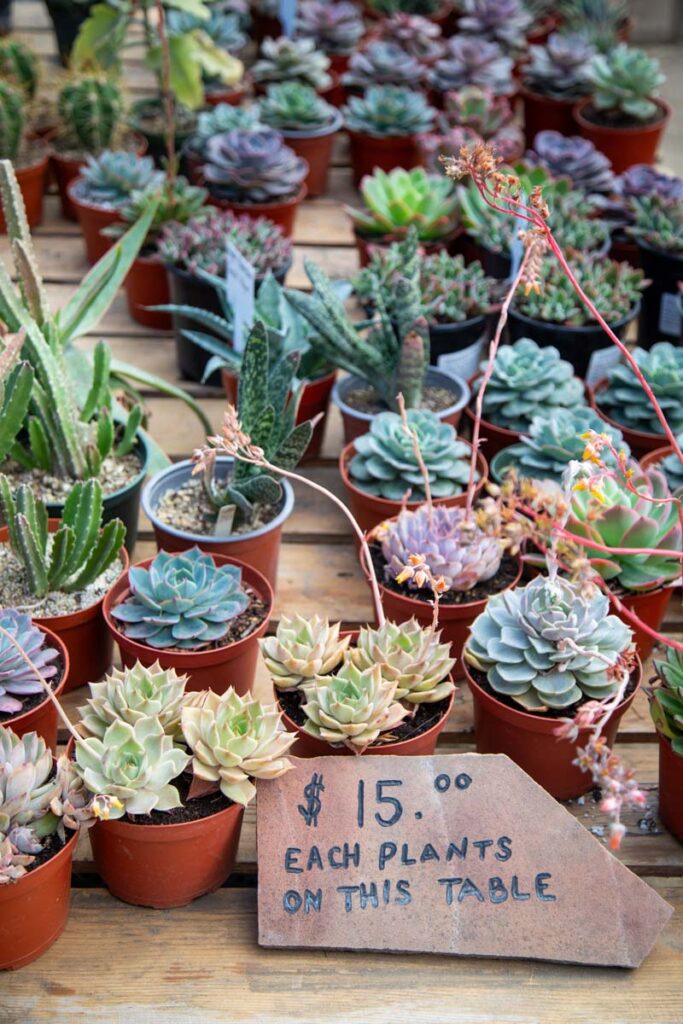
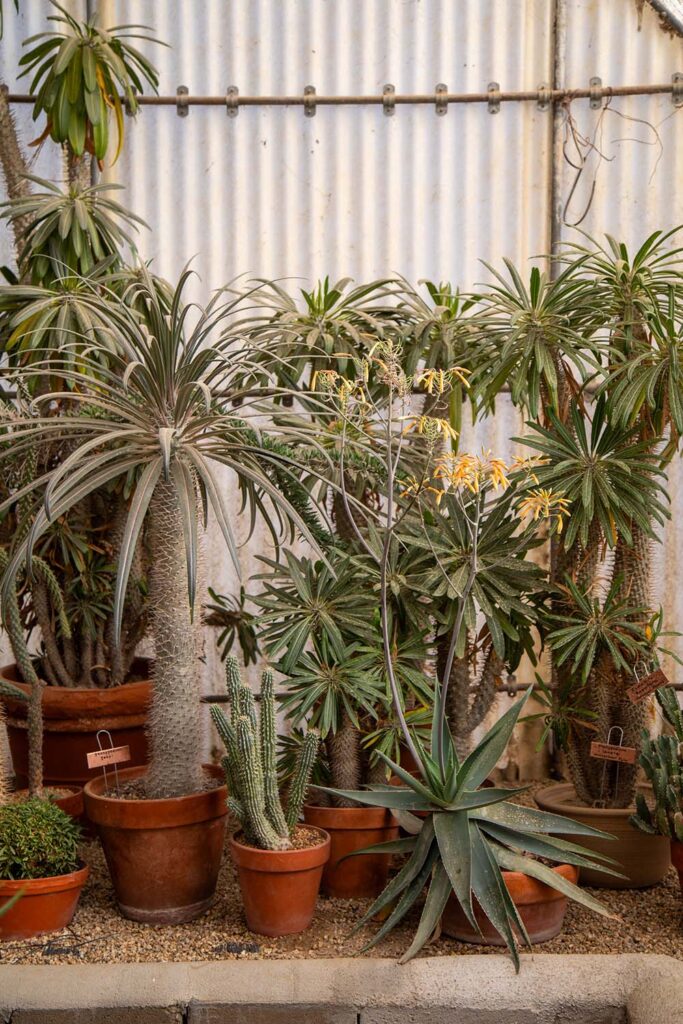
Today, Moorten Botanical Garden operates as both a living collection, an informal classroom, and a working nursery. More than 3,000 varieties grow on-site, including Mojave Desert natives found throughout California, such as yuccas, chollas, hedgehog cactus (Echinocereus), agaves, and several species of ocotillo, some of which are rare.
Not every plant thrives equally. Over the years, Chester relocated more than a hundred Joshua trees from higher elevations, though the desert floor of Palm Springs is warmer than they prefer. It’s a reminder that even desert plants have precise environmental needs.
At the garden, which serves as an informal classroom, visitors learn the difference between true cacti, native only to the Americas, and other succulents. Nearly everything grown here is also available for purchase, making the garden both educational and practical for those interested in drought-tolerant landscaping. A visit to Moorten Botanical Garden means not only seeing California native plants up close and personal but also learning from local experts how to bring these plants into one’s own backyard.
The Second Generation and the Legacy
Clark Moorten grew up inside the garden. He worked other jobs for a few years early on, “just to see what the world was like,” and then came back. “This isn’t a job,” he says. “This is a life. I just live it.”
He now runs the garden with help because “there’s way too much for one person,” but he still does the daily walking and watching. He talks about plants the way long-married couples talk about each other. “Plants are like people. They live, and then they die. So then you’ve got to get better people and better plants.” Ask about his favorite plant, and he grins. “It changes about every ten feet when I’m walking through.”
He is also, by his own cheerful definition, California Grown. “California grown is me!” he says. “California is the leading agricultural state. It has all the seasons. It has all the crazy people. This state probably produces about half of the nation’s agricultural output. So we all have to look after each other and keep everything growing.” Family-run nurseries like Moorten play a critical role in preserving plant knowledge and supplying regionally appropriate species across California.
Plan Your Palm Springs Visit
For travelers interested in California agriculture and desert ecosystems, Moorten Botanical Garden is one of the most accessible and engaging stops in Palm Springs. The Moorten Botanical Garden sits on South Palm Canyon Drive, less than a mile from downtown Palm Springs.
Self-guided entry is affordable and kid-friendly. A local docent program, run in partnership with the Riverside County Extension, leads guided tours several times a day. Budget about 90 minutes, since the docents are excellent and visitors tend to have many questions.
Pair a morning at Moorten with a deeper look at what grows in Riverside County and the full Palm Springs and Riverside agritourism guide. Clark’s own recommendations for Palm Springs travelers who love the desert: the Indian Canyons, the Living Desert Zoo and Gardens in nearby Palm Desert, and the Agua Caliente Cultural Museum in the middle of town. He waited thirty years for the museum to open and considers it essential.
For more California desert and farm stories, plan your next agritourism stop on Experience California Agriculture.
Frequently Asked Questions About Moorten Botanical Garden
Who founded the Moorten Botanical Garden?
Chester “Cactus Slim” Moorten, a former silent-film actor and gold miner, and his wife, botanist Patricia Moorten, founded the nursery in 1939 and acquired the current Palm Springs garden location in 1955. Their son, Clark Moorten, runs the garden today.
What is the Cactarium?
The Cactarium is a greenhouse designed specifically for desert plants, a concept Patricia Moorten coined. The original structure at Moorten Botanical Garden has stood for more than 50 years and is widely considered the world’s first.
What kinds of plants are at Moorten Botanical Garden?
The garden holds more than 3,000 varieties of desert plants organized by geographic habitat, from Baja California across the American Southwest into Mexico. Highlights include native yuccas, chollas, hedgehog cactus (Echinocereus), agaves, and six different species of ocotillo.
Is Moorten Botanical Garden open to the public?
Yes. The garden is open for self-guided visits with a small admission fee, and docent-led tours are offered regularly. Most plants on-site are also for sale through the nursery.
This article was written by CA GROWN Creator Aida Mollenkamp, and images from Salt & Wind.
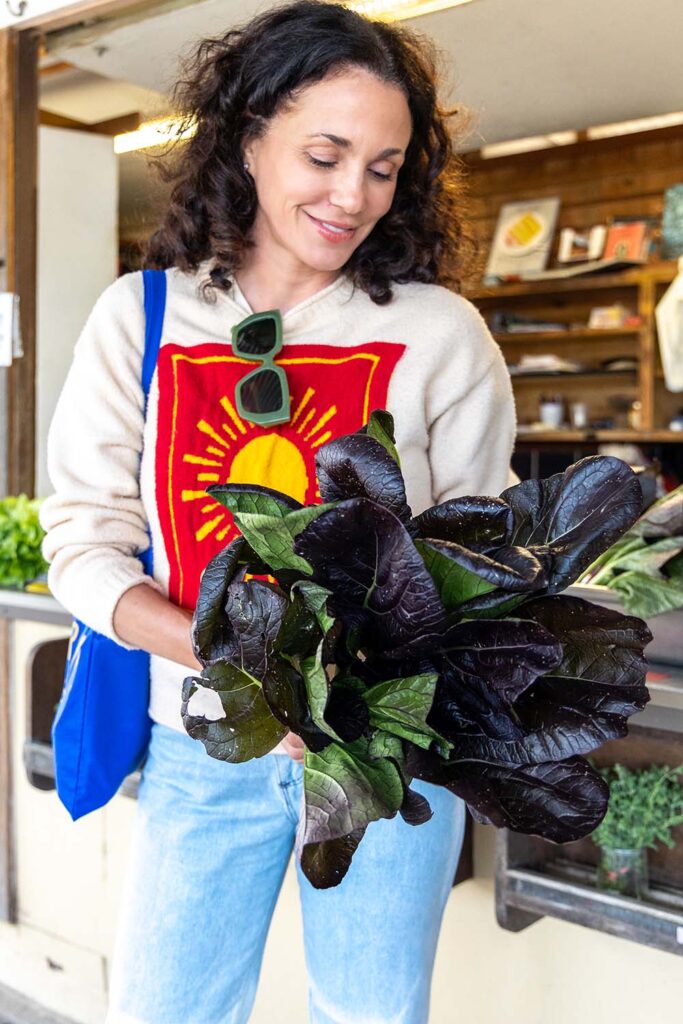
Aida is a food and travel expert, author, chef, Food Network personality, and founder of Salt & Wind Travel. With a career in food travel media and hospitality, she has traveled the globe in search of the best food destinations. Her cookbook, Keys To The Kitchen, is a favorite among home cooks seeking adventure, and her Travel Guides For Food Lovers series is cherished by food travelers.
Influenced by her many adventures and inspired by California’s bountiful produce, Aida’s recipes are fun, fresh, and bursting with flavor. We’re loving her Grilled Artichoke Recipe with Herbed Roasted Garlic Aioli – you will too!