

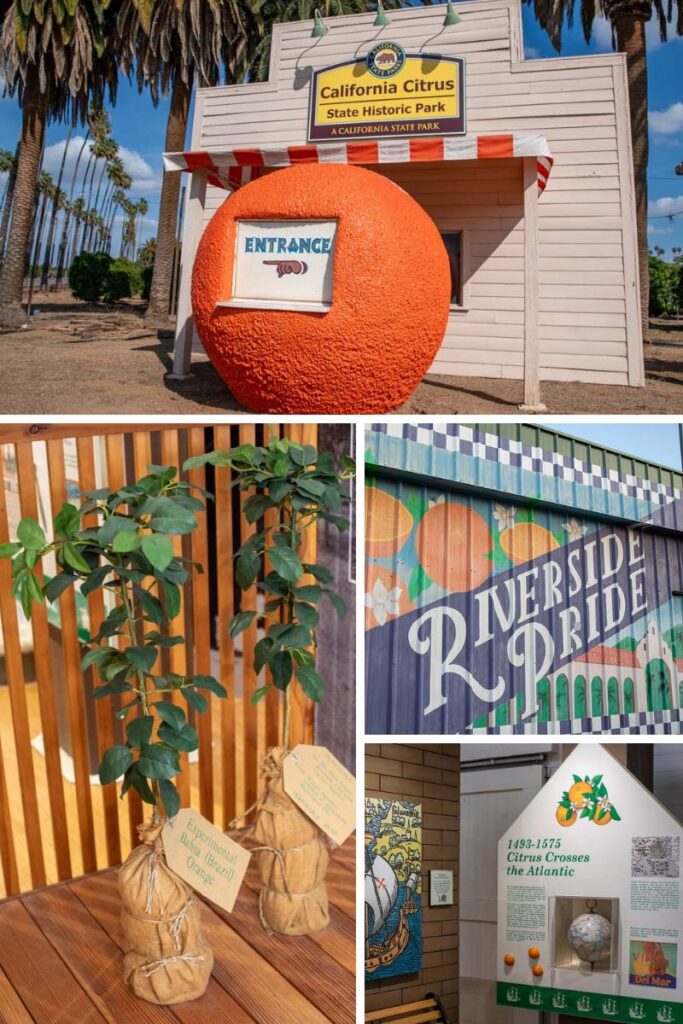
Say hello to the California Citrus State Historic Park (and make sure to add it to your California bucket list)! The California Citrus State Historic Park is the only state park in the country dedicated entirely to citrus, and it brings a lot to the table.
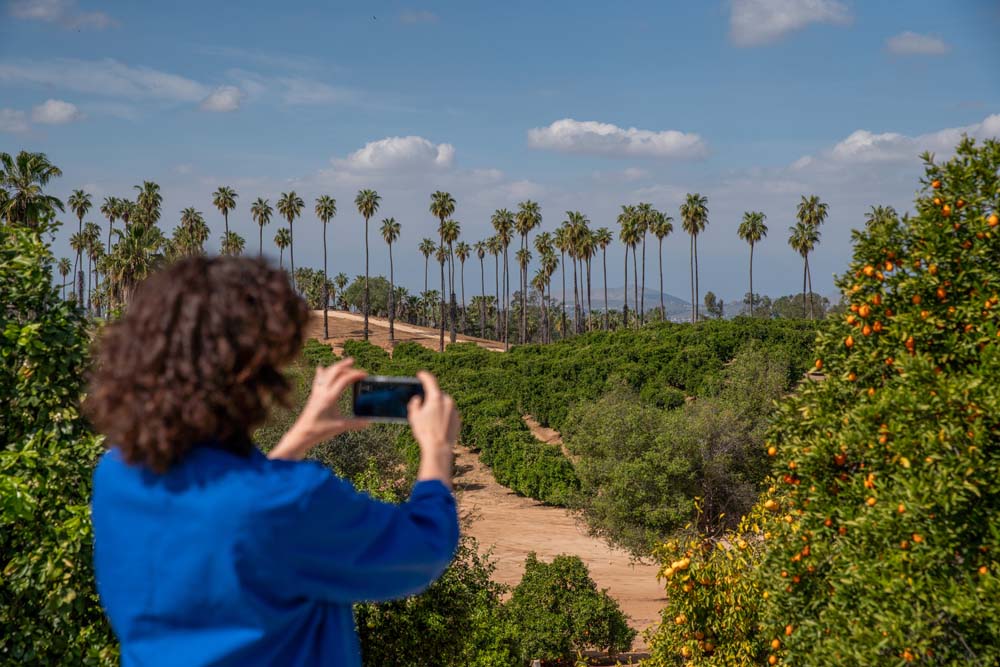
California Citrus State Historic Park is a 248-acre working citrus grove and agricultural museum in Riverside, California. Dedicated to preserving the state’s citrus industry, the park grows oranges, lemons, grapefruit, and specialty varieties. It showcases how citrus farming shaped the Inland Empire.
It’s one of the most accessible agritourism experiences in Southern California for understanding how citrus is grown, harvested, and brought to market. The park is also the most underrated stop in Riverside County. Here is what to expect, what to see, and how to plan a visit.
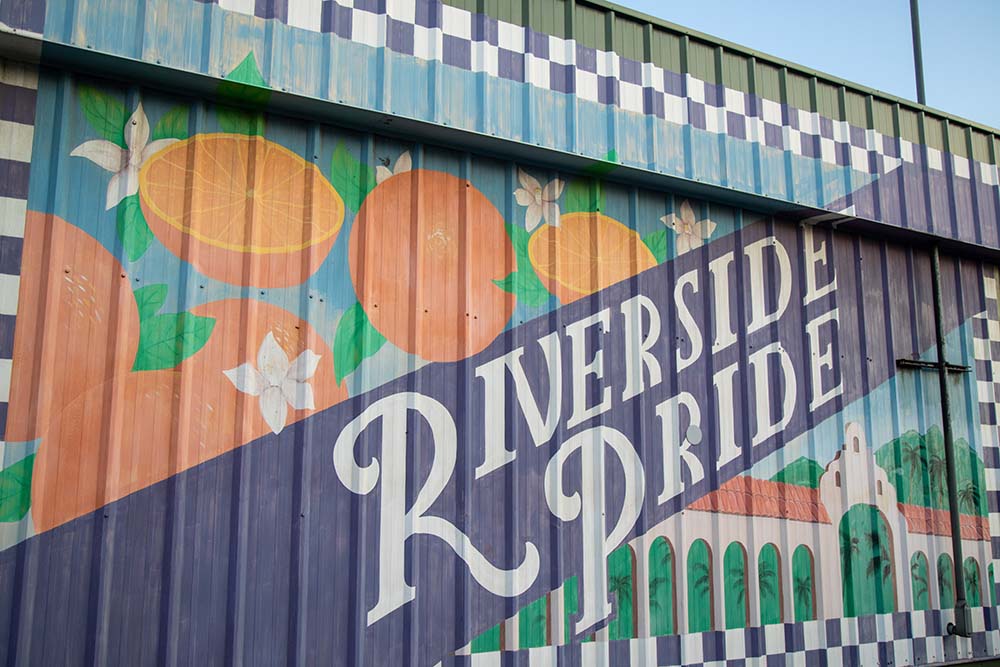
Why Riverside Is Known For Citrus
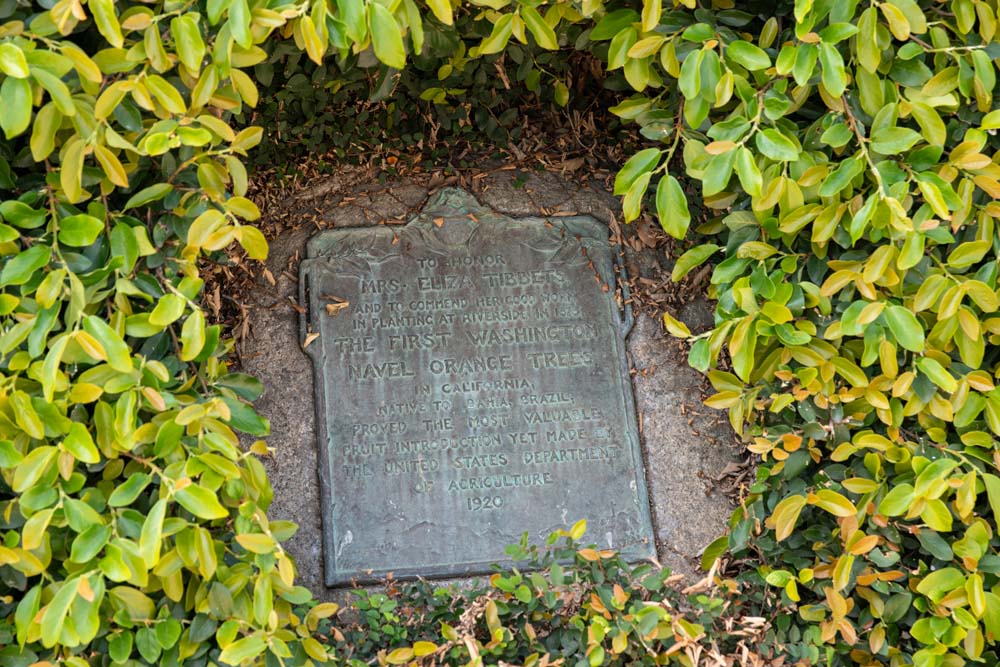
Riverside is considered the birthplace of California’s citrus industry. In part, this is thanks to the introduction of the Washington navel orange in 1873 by Eliza Tibbets. The region’s climate, irrigation systems, and early agricultural innovation helped turn citrus into one of California’s most important crops. It is an influence that continues across the state today.
A State Park Built Around the Citrus Industry
California Citrus State Historic Park opened in 1993, purpose-built to preserve the cultural and agricultural legacy of the crop that once made Riverside one of the wealthiest cities per capita in the United States.
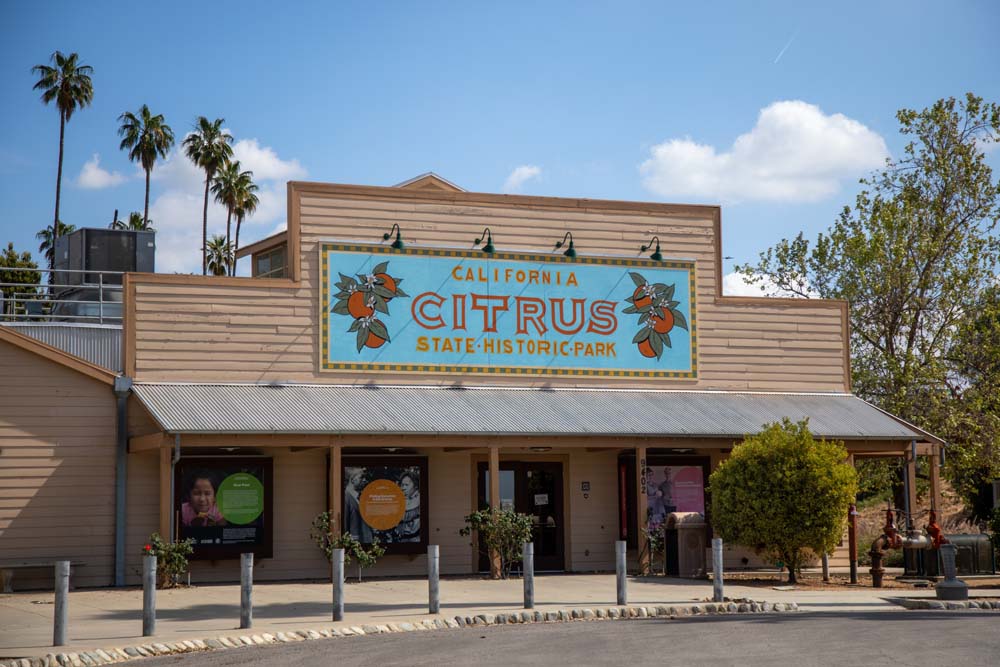
The park sits on land that was actively farmed as citrus groves for most of the 20th century. This site continues as a working grove today. Orange, lemon, grapefruit, and specialty citrus trees line the interpretive trails. The visitor center sits inside a California-craftsman-inspired building designed to evoke the packing-house architecture of Riverside’s citrus heyday.
This is a state historic park in the genuine sense: you are not visiting a static museum. You are walking through a landscape that shows visitors what California’s Inland Empire was like during the citrus heyday, roughly 1890 to 1940.
The park is one of the only state parks in the United States dedicated entirely to citrus agriculture. And it means a lot that it is in the Golden State because California produces the majority of the United States’ fresh citrus, and sites like this preserve the history behind that industry.
Heritage Citrus Varieties You Will See
The grove highlights both commercially important citrus and rare cultivars that reflect California’s role in global citrus development. The park’s grove plantings include far more than standard varieties you’ll see at your local supermarket.
As you walk about, you’ll find Washington navels – the direct commercial descendants of the Parent Washington Navel Tree a short drive away). You will also find Valencia oranges, Cara Cara navels, blood oranges, Minneola tangelos, pomelos, Eureka and Meyer lemons, Bearss limes, Marsh and Rio Red grapefruit, kumquats, Buddha’s hand citrons, and a rotating set of specialty cultivars from UC Riverside’s extensive Citrus Variety Collection.
Depending on the season, trees may be blossoming, setting green fruit, ripening, or ready to pick. Winter through early spring brings the orange blossom bloom, and the whole park smells like the most intense citrus perfume imaginable.
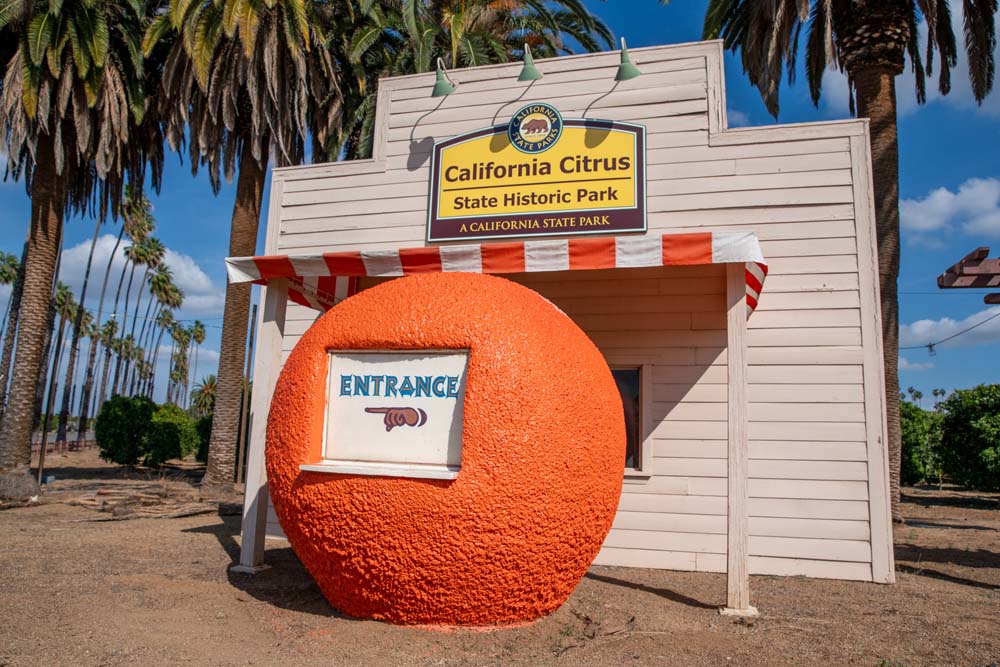
The Visitor Center and Sunkist Center
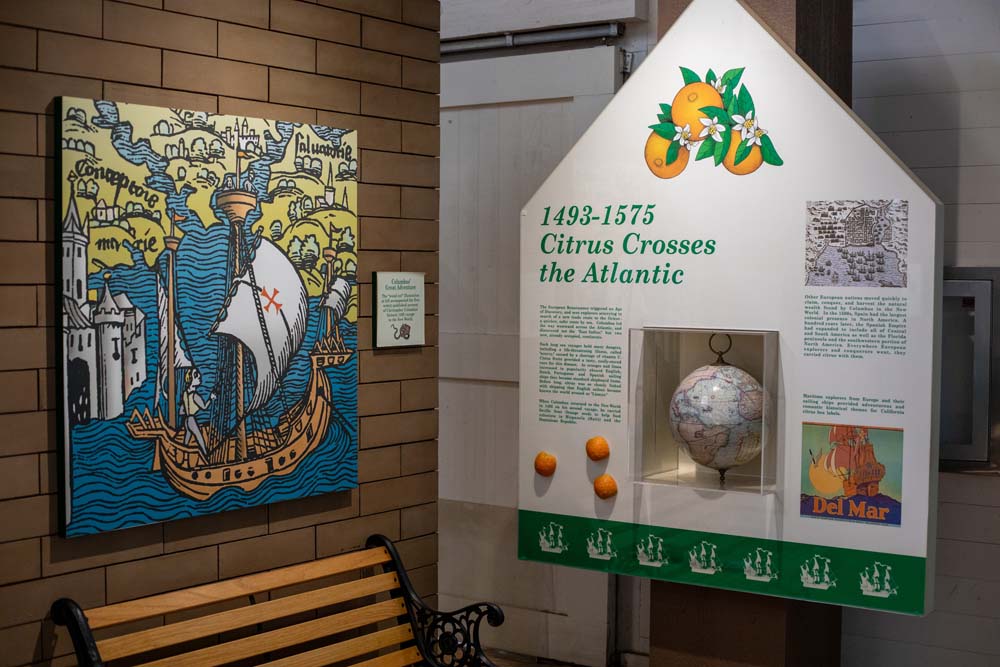
The park’s main visitor area includes an interpretive museum. It has exhibits on the early Riverside citrus boom, the evolution of irrigation in Southern California, the role of Eliza Tibbets and the Parent Washington Navel Tree, and the founding of the citrus cooperative that became Sunkist Growers.
There is even a section on the social and labor history of the citrus industry. This sections includes the role of the Bracero Program and other agricultural labor forces. A short film typically plays on loop in the center and makes a good first stop before walking the grounds. The center also hosts docent-led tours, seasonal school programs, and special events tied to the harvest calendar.
Private weddings and events regularly use the park’s Sunkist Center building and the restored Victorian gazebo overlooking the lower grove.
Picnics, Trails, and Harvest Walks
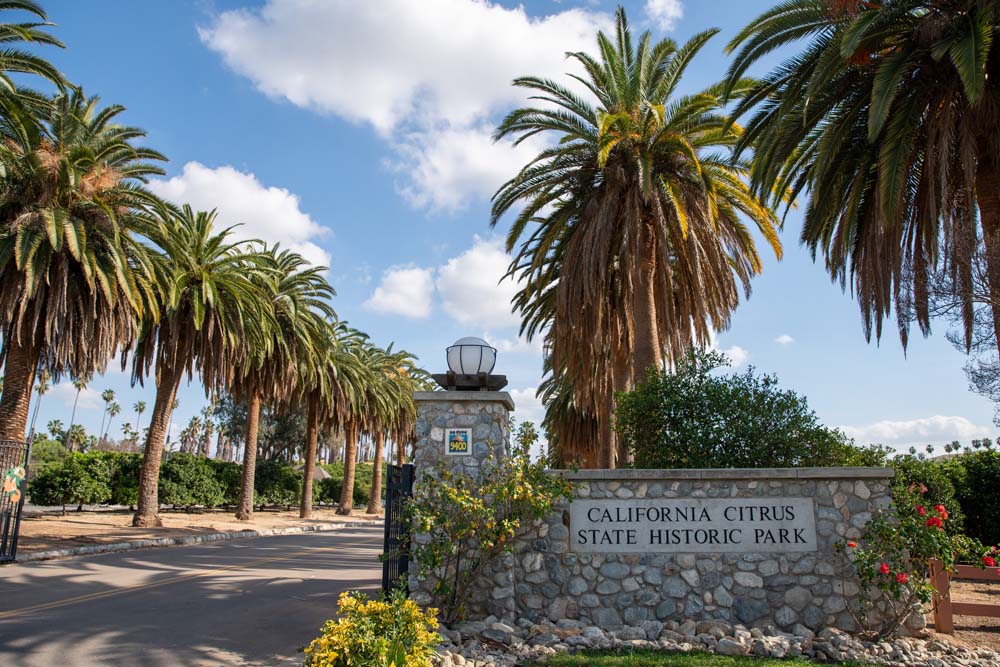
Beyond the museum, the California Citrus State Historic Park is set up for getting outside and exploring on foot. Paved interpretive trails loop through the grove plantings, along rows of heritage trees with identifying signage, and up to overlook points with views across the Riverside basin.
Picnic tables, shaded ramadas, and lawns are available for day use. The grove paths are largely flat, easy to walk with kids, and accessible in most sections.
During public harvest events, visitors can sometimes sample fruit directly from the trees. They can also watch citrus-packing demonstrations, and learn about grafting techniques in hands-on workshops. The park’s event calendar changes year to year, so check the official California State Parks page before planning a harvest-focused visit.

Women in California’s Citrus Story
2026 is the United Nations’ International Year of the Woman Farmer, and California’s citrus industry has a foundational woman in its origin story. Eliza Tibbets planted the two navel orange trees that started the industry in her Riverside garden in 1873, and tended them herself. As such, she is the person most historians credit with actually making the Washington navel commercially viable in California.
The Parent Washington Navel Tree still stands ten minutes from California Citrus State Historic Park. No Riverside citrus visit is complete without both stops. The park’s interpretive programming makes a point of telling this history accurately. It is part of what makes the site a better-than-average California agricultural landmark.
Pairing the Park With the Parent Navel Tree
A classic Riverside citrus-history day looks like this: start at the Parent Washington Navel Tree at Magnolia and Arlington Avenues in the morning, spend about fifteen minutes at the historic marker and the surrounding grove, then drive ten minutes to California Citrus State Historic Park for a guided walk, museum visit, and picnic.
If you have extra time, add a stop at UC Riverside’s Botanic Gardens and finish at a local packing-house-turned-taproom or farm-to-table restaurant in downtown Riverside.
Dive Deeper Into Riverside Agriculture
For more, see what grows in Riverside County and more than 15 activities to do in Palm Springs and Riverside County. Browse additional CA GROWN grower profiles on the blog or plan your next stop at Experience California Agriculture.
Frequently Asked Questions About California Citrus State Historic Park
Where is California Citrus State Historic Park?
California Citrus State Historic Park is located at 9400 Dufferin Avenue in Riverside, California, about ten minutes from the Parent Washington Navel Tree and approximately an hour and fifteen minutes from Palm Springs. It is part of the California State Parks system.
How much does it cost to visit?
The park charges a modest day-use fee (per vehicle, with additional fees for tours or events). Fees change seasonally, so check the California State Parks page before arriving.
When is the best time to visit California Citrus State Historic Park?
Winter through early spring is the peak fruit season, with trees bearing visible citrus. Late winter to mid-spring brings the famous orange blossom bloom and the best scent experience. Early morning visits are quieter and cooler in the summer months.
Can I pick fruit at the park?
Visitors are generally not allowed to pick fruit off the trees. Public harvest events, seasonal “you-pick” programs, and docent-led tours occasionally offer limited sampling. Check the park’s current event calendar for the most up-to-date options.
What is the connection between the park and the Parent Washington Navel Tree?
The Parent Washington Navel Tree, planted in Riverside in 1873 by Eliza Tibbets, is the genetic ancestor of nearly all Washington navel oranges grown commercially today. California Citrus State Historic Park was established in 1993 to preserve the broader Riverside citrus landscape that grew out of that tree. The two sites are a natural pair on a Riverside agritourism day.
This article was written by CA GROWN Creator Aida Mollenkamp, and images from Salt & Wind.
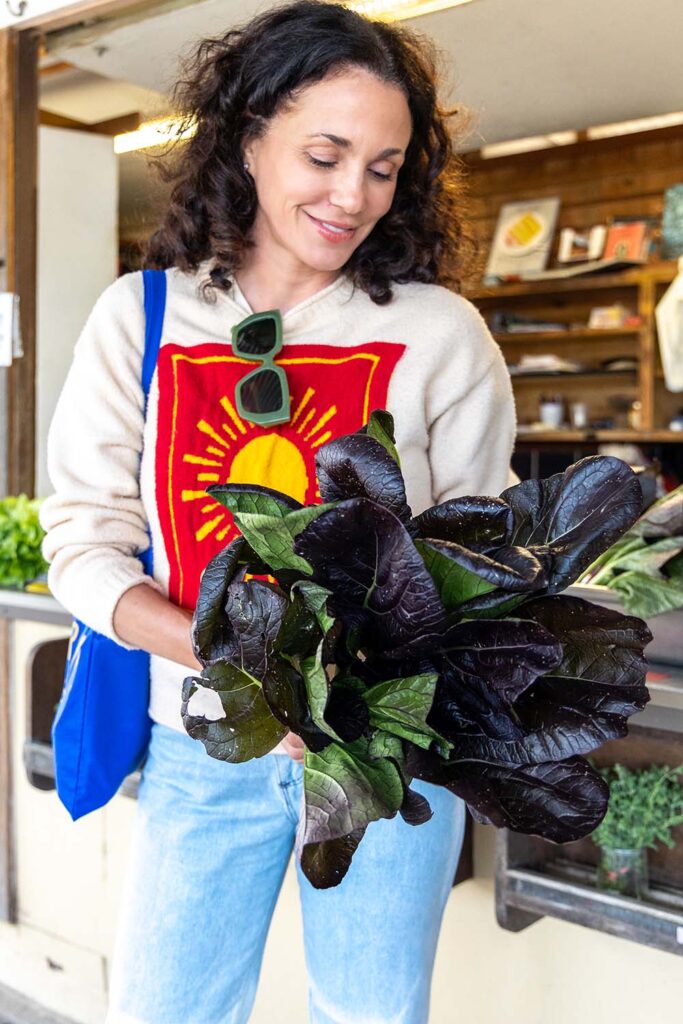
Aida is a food and travel expert, author, chef, Food Network personality, and founder of Salt & Wind Travel. With a career in food travel media and hospitality, she has traveled the globe in search of the best food destinations. Her cookbook, Keys To The Kitchen, is a favorite among home cooks seeking adventure, and her Travel Guides For Food Lovers series is cherished by food travelers.
Influenced by her many adventures and inspired by California’s bountiful produce, Aida’s recipes are fun, fresh, and bursting with flavor. We’re loving her Grilled Artichoke Recipe with Herbed Roasted Garlic Aioli – you will too!